
Providing protection-focused immigration support for individuals seeking safety in Canada through the refugee and asylum process.
Refugee Claims in Canada
Immisa Immigration
What Is a Refugee Claim in Canada?
A refugee claim in Canada is a formal legal proceeding in which an individual asks Canada for protection because they cannot safely return to their country of nationality or habitual residence. These claims are assessed by the Immigration and Refugee Board of Canada (IRB), specifically by its Refugee Protection Division (RPD).
Refugee claims are not discretionary applications and are not decided on compassion alone. Decision-makers apply statutory tests, assess credibility and evidence, and rely heavily on country-conditions documentation. Outcomes can determine whether a person is allowed to remain in Canada or faces removal.
At Immisa Immigration, we approach RPD claims as evidence-driven legal cases, prepared with structure, corroboration, and procedural accuracy.
Legal Grounds for Refugee Protection
Convention Refugee
A Convention Refugee is a person with a well-founded fear of persecution based on at least one protected ground, such as race, religion, nationality, political opinion, or membership in a particular social group. The analysis focuses on targeted harm, the link to a protected ground, the availability of state protection, and whether internal relocation is a reasonable option.
Person in Need of Protection
A Person in Need of Protection may not meet the Convention definition but faces a risk to life, risk of torture, or cruel and unusual treatment or punishment if returned. These cases often involve non-state actors, generalized violence with personalized risk, or systemic failures of protection.
Common Reasons RPD Claims Are Refused
RPD refusals frequently result from:
- Inconsistencies between testimony and the BOC
- Lack of corroborating evidence without explanation
- Findings of available state protection
- Viable internal relocation alternatives
- Delays or conduct undermining credibility
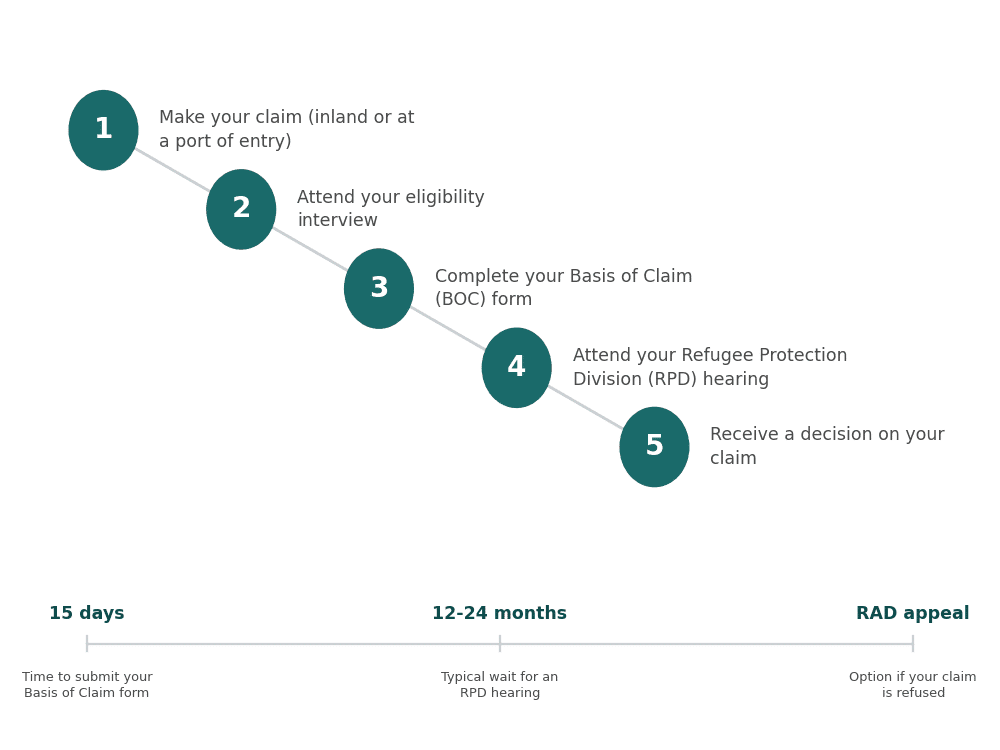
Step-by-Step Refugee Claims Process

1
Refugee Claims
The process begins by determining whether the person qualifies as a Convention Refugee or a Person in Need of Protection and whether they are eligible to make a claim in or through Canada.
Claim Submission
A refugee claim is submitted either inside Canada or through an overseas resettlement program. Identity, background, and protection grounds are recorded as part of the formal claim.
2
3
IRB Review & Hearing
The Immigration and Refugee Board (IRB) reviews the claim. In many cases, a hearing is held where the claimant must explain why they need protection and provide supporting evidence.
Decision
The IRB decides whether the person meets the legal definition of a refugee or person in need of protection under Canadian law.

4
5
Permanent Residence
If the claim is approved, the individual can apply for permanent residence in Canada and begin the process of lawful settlement and protection.
WHY CHOOSE IMMISA For Refugee Claims ?
Protection-Focused Case Review
We assess whether a claim meets the legal definitions of Convention Refugee or Person in Need of Protection before proceeding, so the case is built on the correct protection grounds.
IRB-Ready Preparation
Refugee claims are prepared for review by the Immigration and Refugee Board, including clear narratives and supporting evidence for hearings and written decisions.
Evidence-Based Submissions
Claims rely on identity documents, country information, and personal statements that explain risk and lack of state protection in a structured, consistent way.
Strategic Refugee Case Preparation
We prepare refugee claims with structured narratives, evidence, and legal alignment to strengthen credibility and improve approval outcomes.
Our Approach
Claim Eligibility Assessment
We assess your situation, legal grounds, and eligibility to determine whether refugee protection criteria are met.
BOC & Narrative Review
We help prepare your Basis of Claim narrative and review supporting evidence to consistency, clarity and credibility.
Strategic Hearing Preparation
We prepare your case for RPD hearings, ensuring readiness to address credibility, documentation and officer questions.
Frequently Asked Questions
Who can make a refugee claim in Canada?
People who fear persecution or serious harm in their home country and meet the legal definition of a Convention Refugee or Person in Need of Protection may qualify.
Is a refugee claim the same as an asylum application?
In Canada, a refugee claim is the legal process used to request asylum and protection under Canadian immigration law.
Do all refugee claimants get a hearing?
Many claims are decided by the Immigration and Refugee Board, and some require a hearing where the claimant explains their situation and submits evidence.
Can I work while my refugee claim is being processed?
In many cases, claimants may apply for a work permit while their refugee claim is under review.
What happens if my refugee claim is approved?
If approved, you can apply for permanent residence in Canada and begin the process of long-term settlement.
What if my refugee claim is refused?
A refusal does not always mean the end of your options. Some people may have the right to appeal or seek judicial review.
Do I need a lawyer or consultant to make a refugee claim?
You can apply on your own, but working with a licensed RCIC helps ensure your claim is prepared correctly and supported with proper evidence.
Ready To Take that First Step ?
Refugee claims involve life-altering decisions and complex legal tests. Professional guidance at the earliest stage can significantly affect outcomes.