For Canadian employers, sponsoring a foreign worker has never been a simple paperwork exercise — and in 2026, it has become considerably more demanding. Labour Market Impact Assessment (LMIA) wait times have climbed for the third consecutive quarter, Ontario has torn up its entire Provincial Nominee Program structure to rebuild it from scratch, and Employment and Social Development Canada (ESDC) is conducting more compliance inspections than ever before. Workers, meanwhile, remain tied to a single employer for the life of most work permits, which means one compliance misstep on the employer side can derail a person’s entire immigration journey. Understanding where the real friction points are — and which pathways still move quickly — is the difference between a hire who starts on time and a position left vacant for months.
In 2026, employer-sponsored immigration rewards preparation over speed — the employers who build compliant files from day one are the ones who actually get their workers here.
The LMIA Bottleneck Keeps Growing
As of the August 2026 Service Canada update, standard LMIA processing under the high-wage stream is running roughly 90 days, with the low-wage stream close behind at about 82 days — up 70.8% since early 2026. The Permanent Residence stream has seen the steepest increase of all, jumping 70 additional days between July and August alone. These delays are not evenly distributed: seasonal agricultural applications still clear in about a week, while general high-wage and low-wage files sit in queue for two to three months before an officer even opens them. For employers with a hard start date, that gap between “job offer accepted” and “worker legally authorized to begin” is now the single biggest planning risk in the hiring process, and it needs to be built into recruitment timelines from the outset rather than treated as an afterthought.
Employer Compliance Is Not Optional
Getting a positive LMIA is only the beginning of an employer’s obligations. Once approved, employers must retain the full LMIA file — the application, offer letter, payroll records, time sheets, and recruitment evidence — for six years from the later of the work permit’s expiry date or the end of employment. ESDC and Service Canada conduct unannounced inspections, and violations carry administrative monetary penalties ranging from roughly $1,000 per infraction up to tens of thousands of dollars, plus bans of one to ten years on submitting future LMIAs and placement on a publicly searchable list of non-compliant employers. Because a worker’s status is directly tied to their employer’s standing, these penalties do not stay contained to the business — they can jeopardize the employee’s work permit renewal, PNP eligibility, and eventual permanent residence application too.
The Trap of a Single-Employer Work Permit
Most LMIA-based work permits are employer-specific, meaning the worker is legally authorized to work only for the company named on the permit, in the role and location described in the original offer. This creates real vulnerability on both sides. If the employer restructures the role, changes ownership, reduces hours, or closes the location, the worker’s authorization can become invalid overnight, forcing a new LMIA and a fresh application before they can legally keep working. Employers who want to promote a foreign worker, shift them to a different worksite, or materially change their wage or duties must first amend or reapply for the LMIA and work permit — skipping that step is itself a compliance violation. Building flexibility into job descriptions and planning ahead for any anticipated role changes can prevent an otherwise loyal employee from falling out of status.
The Global Talent Stream Is Still the Fast Lane
For employers in technology, engineering, and digital media, the Global Talent Stream (GTS) remains the clearest way around the general LMIA backlog. GTS applications are targeted for processing in about 10 business days, and the resulting work permit is also fast-tracked to roughly 10 business days. Category A covers unique, highly specialized talent referred by an approved designated partner organization, typically requiring an advanced degree or at least five years of specialized experience and a minimum salary around $80,000. Category B covers roles on the Global Talent Occupations List — software engineers, data scientists, cybersecurity specialists, and similar in-demand positions — paid at or above the prevailing wage. Both categories require a Labour Market Benefits Plan showing the hire will create measurable economic benefits in Canada, such as job creation or skills transfer.
Ontario’s PNP Overhaul Changes the Playbook
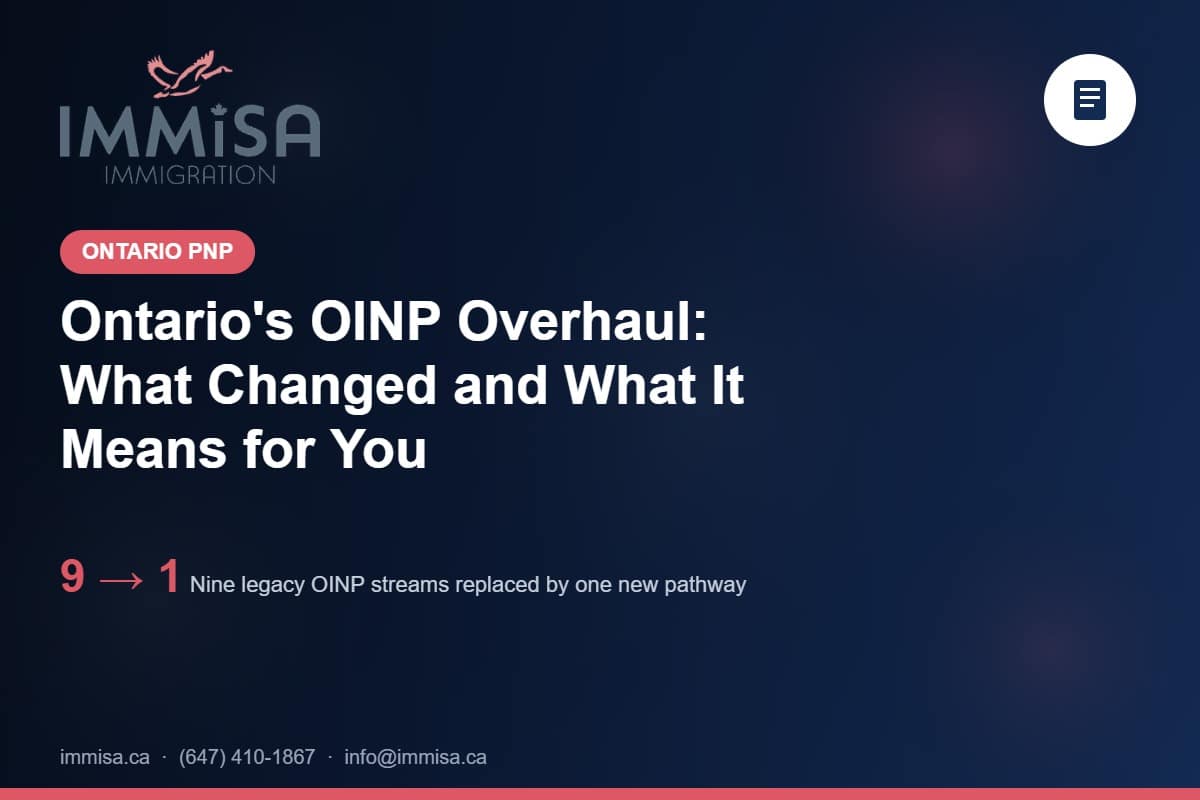
Employers in Ontario now face a substantially different provincial landscape. The province has consolidated eight separate Ontario Immigrant Nominee Program (OINP) employer-driven streams into a single Workforce Priority Stream, reopening the Employer Portal as the mandatory starting point for any job offer-based nomination. The new structure splits into pathways for TEER 0–3 skilled occupations and TEER 4–5 lower-skilled roles, each requiring a permanent, full-time job offer, alongside a separate route for self-employed physicians. Employers must meet revised eligibility rules, including business revenue thresholds that are reduced for rural and northern operators, and the OINP has been given expanded review and enforcement powers. Candidates are then ranked through an Expression of Interest system scored on occupation, wage, Canadian experience, education, language ability, and employer characteristics — meeting the minimums no longer guarantees an invitation.
Next Steps
Employer-based immigration in 2026 rewards employers who plan months ahead, keep meticulous compliance records, and know which pathway actually fits their hiring timeline — whether that is a standard LMIA, the Global Talent Stream, or Ontario’s newly restructured Workforce Priority Stream. Getting this wrong does not just delay a hire; it can expose a business to penalties and put a worker’s status at risk. Sumbal Anees, RCIC, and the team at Immisa Immigration Inc. in St. Catharines work directly with employers across Ontario to build compliant LMIA applications, navigate the Global Talent Stream, and structure PNP-ready job offers under the new OINP rules. If your business is planning to sponsor a foreign worker, or you are currently navigating a work permit tied to a Canadian employer, book a consultation with Immisa Immigration Inc. today to get a clear, compliant path forward.